

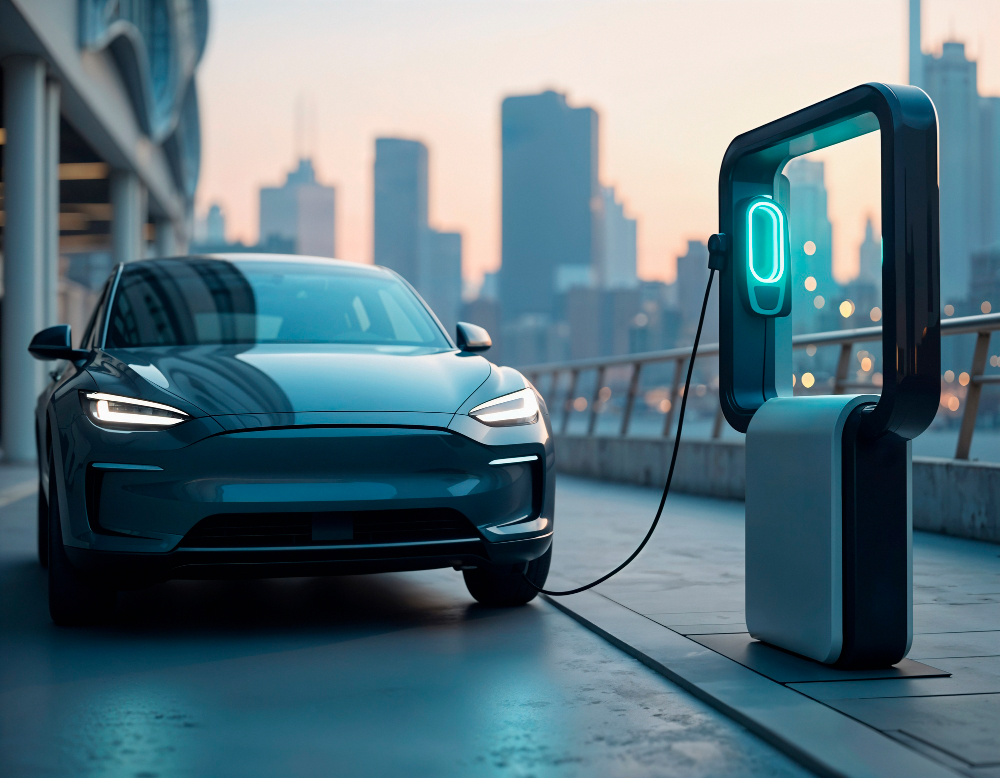
Vehicle charging systems can feel confusing when you’re new to electric cars. You might be asking yourself things like:
- “How does the car actually charge?”
- “What’s the difference between Level 1, Level 2, and fast charging?”
- “Do I need special equipment at home?”
- “How long should charging really take?”
If any of that sounds familiar, you’re in the right place. This guide breaks down Vehicle Charging Systems in a simple, conversational way so you understand exactly how things work without getting lost in technical jargon.
Grab a coffee. Let’s walk through this together like friends.
What Exactly Are Vehicle Charging Systems?
Vehicle charging systems are the tools, components, and power sources that supply electricity to your EV battery. Think of them like the “fueling station” for your electric car — just cleaner, quieter, and way cheaper than gas.
A complete EV charging system includes:
- Your charger (onboard charger inside your car)
- The charging cable
- Your home outlet or wall charger
- Charging stations on the road
- The software that controls charging speed and safety
No matter the brand — Tesla, Ford, Kia, Rivian, Hyundai — they all rely on the same basic charging principles.
How Vehicle Charging Systems Actually Work
Here’s the simplest way to understand it:
- Electricity flows from the grid (your home or public station).
- The charger inside your car converts that power to the right form.
- It safely sends that energy into the battery pack.
- The vehicle’s software monitors everything — temperature, voltage, charging speed — to protect the battery.
You plug in → the system checks everything → the battery fills up.
Nothing complicated on your end.
The Three EV Charging Levels Explained
Every EV driver should understand the difference between charging levels. They control how fast your EV charges at home and on the road.
1. Level 1 Charging (Standard Home Outlet)
This uses a regular 120V household outlet — the same one you use for a toaster.
- Adds 3–5 miles per hour
- Best for overnight charging
- Works anywhere in the US
- Slowest but convenient
Good for: Short daily commutes under 30 miles.
Example:
If you plug in at 8 PM and unplug at 8 AM, you might gain 40–60 miles of range. Perfect if you’re not driving long distances.
2. Level 2 Charging (240V Home or Public Charger)
This is the most popular choice for home charging.
- Uses a 240V outlet (like a dryer outlet)
- Adds 20–40 miles per hour
- Requires installation of a wall charger
- Available at many workplaces and public lots
Good for: Most EV owners who want fast and reliable overnight charging.
Real example:
A Tesla, Mustang Mach-E, or Hyundai Ioniq 5 can go from 20% to 80% overnight without stress.
3. DC Fast Charging (Public Only)
This is the big one — the fastest charging available today.
- Adds 150–250+ miles in 15–30 minutes
- Uses DC power directly
- Common on highways and travel stops
- Not needed for daily charging
Good for: Road trips, long-distance travel, quick top-ups.
Every EV supports different peak charging speeds, so your car determines how fast it can go.
What Plays a Role in Charging Speed?
Your charging time depends on several factors:
1. Battery size
Bigger battery = longer time
Smaller battery = faster fill
2. Charging level
Level 1 < Level 2 < DC Fast Charging
3. State of charge
EVs charge faster from 10–60% and slow down near 80% to protect the battery.
4. Temperature
Extreme cold or heat affects charging speed.
5. Your car’s onboard charger
This limits how fast your car can accept AC power.
Benefits of Vehicle Charging Systems for New EV Owners
- Lower “fuel” costs compared to gas
- Cleaner energy
- Quieter operation
- Home convenience
- Less maintenance (no oil changes!)
- Longer battery life when charging properly
Think of it as replacing your gas runs with something simpler, calmer, and cheaper.
FAQ: Vehicle Charging Systems
1. Do all EVs use the same charging plug?
Most do now. Tesla uses the NACS plug, which many automakers are adopting. Most Level 2 stations support J1772 adapters.
2. Will fast charging damage my battery?
Not exactly — but using it daily can cause faster wear. Use it for travel, not everyday charging.
3. Do I need to charge my EV to 100%?
Not daily. For battery health, most EVs prefer 20–80% for everyday driving.
4. How long does it take to install a home charger?
Usually 1–3 hours once the electrician arrives.
Final Takeaway
Understanding Vehicle Charging Systems helps you charge smarter, protect your battery, and save money. Once you know the basics — Level 1, Level 2, fast charging, and what affects charging speeds — owning an EV becomes much easier.
With the right setup, charging your EV feels as simple as plugging in your phone every night.
Vehicle charging systems make EV ownership easy, reliable, and convenient — the perfect way to start your electric journey.